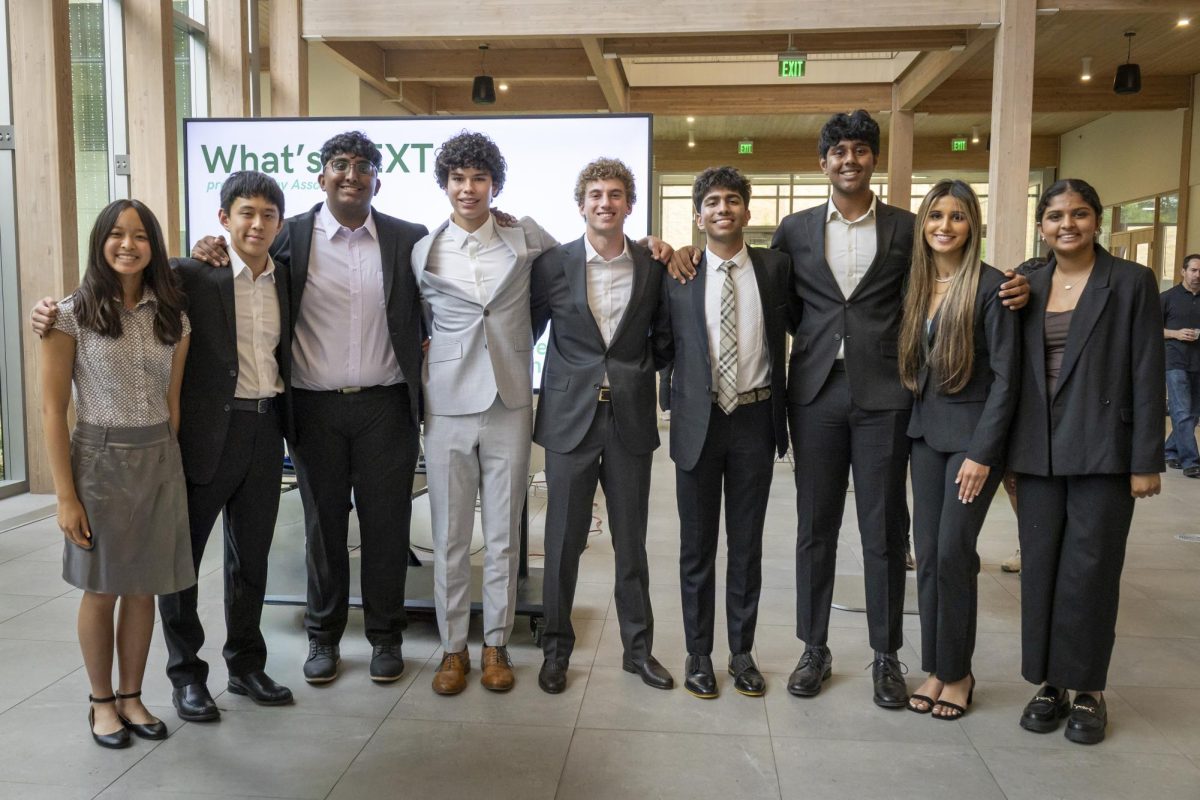
On April 27, six selected teams of students presented business ideas and creative projects to a panel of executives for the opportunity to receive funding at the third annual What’s NEXT Pitch event.
Students worked for several months with the Speech and Debate Department and the Design and Innovation Department to develop proposals, conduct research and refine presentations, according to the organizers of the event. The process culminated in “Pitch Night,” a final round of timed pitches followed by questioning from judges that marks the conclusion of months of dedication.
“I’m excited to present this idea we’ve been working on after so long in front of an audience and hear the feedback from the critics,” sophomore Cindy Chou said.
From Concept to Competition
Students began developing their projects in late January after registering for the pitch-off, according to Director of Design and Innovation Matthew Abbondanzio. The event model was adapted from a program he introduced at a previous school to address gaps in student access to funding and mentorship.
“Kids have all these ideas, and sometimes they just don’t have the money, mentorship or connections to make it happen,” Abbondanzio said.
After presenting the idea to school administrators, the program launched at Greenhill and has been funded primarily through parent donations. More than 40 teams typically register each year, with 18 to 20 teams advancing to preliminary rounds.
To receive funds, students must follow a process that spans across a period of four months. It includes registration, initial meetings and required checkpoints with faculty mentors.
Additionally, students are expected to research their idea in depth, identify a problem and prepare a structured pitch before advancing to the final “Pitch Night.”
“I think the biggest challenge is getting the students through the work earlier on,” Abbondanzio said.
Sophomore Sophia Yang worked with Chou to create a project that uses a non-nicotine device to address teen vaping behaviors. Yang said their experience reflected the process Abbondanzio mentioned as it required sustained research and testing before reaching the pitch stage.
“We had so much content in our slide, so it was very difficult to condense it,” Yang said.
Faculty mentors, assigned to each participant, met with students regularly to guide research, design and presentation development, according to participants. The preliminary pitch rounds include a five-minute presentation followed by a five-minute question session, in which Greenhill faculty evaluated the preparation, presentation, and overall delivery of students rather than business viability, according to Abbondanzio.
Looking Ahead to a Larger Scale
The What’s NEXT Pitch program is expected to undergo structural changes in future years, including an earlier start to the process and additional checkpoints designed to distribute student work more evenly across the semester, according to Abbondanzio.
“I think I’ll start it in September rather than November, to give folks sort of a heads up,” Abbondanzio said.
He said the goal of the changes is to improve pacing and ensure students complete key milestones before the final pitch events, rather than concentrating on work near the end of the timeline.
In addition to internal adjustments, Abbondanzio said he is working to expand the program beyond Greenhill by partnering with other schools in the region. The long-term goal, he said, is to create a larger, multi-school pitch event supported by external corporate sponsors.
“My goal is to have everyone culminate into a larger one where we get real corporate sponsors,” Abbondanzio said.
Students said participation in the program provides exposure to skills used in professional environments, including public speaking and presenting ideas to external evaluators.
“It teaches different public speaking styles, presenting a product in front of a large mass of people,” Chou said.
Abbondanzio says students who feel unsure should still sign up, since participating offers only potential benefits and no real downside.
“You’re going to learn a lot about yourself, and you’re going to learn about the process,” Abbondanzio said. “You’re guaranteed to go to pitch off, and then you’ll get feedback.”