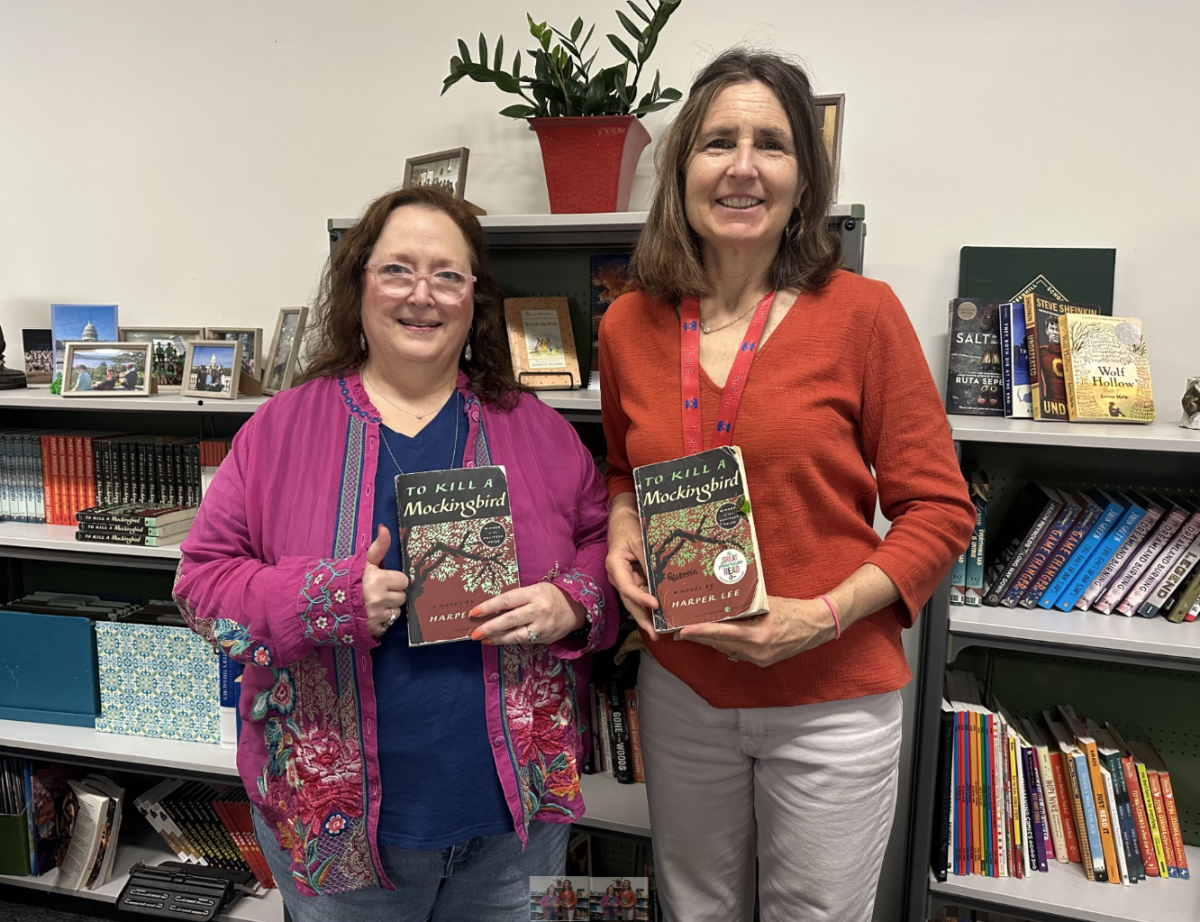
After finishing Harper Lee’s novel “To Kill a Mockingbird,” eighth grade teachers introduced a new project to the curriculum: interviewing someone who read the book more than two years ago.
The eighth grade English teachers wanted the students to be able to express what they learned from the book in a creative way, while also keeping it writing and explanation based.
“We wanted to do something that was not a traditional essay that would allow for a little bit of your creativity to come through,” said eighth grade English teacher Susan Bauman.
Eighth grade English teacher Suzanne Yaffe was inspired to bring this project to Greenhill by her brother, an English teacher in New Orleans, who did something similar.
“He and I talk all the time about English and what we teach and what we love about teaching, and we share ideas,” Yaffe said.
Yaffe proposed this idea to Bauman. The two discussed what they were thinking and why they should test this out.
“I pitched it to Mrs. Bauman, and she loved the idea, so we spent a whole lot of time thinking about how we could transform what my brother had done,” Yaffe said.
Students were assigned to interview someone in their life that read the novel two or more years ago. Questions consisted of reflections, ideas, opinions, and the interviewees’ overall experience with the novel.
Students use the interview to pick out quotes, themes, and ideas and turn it into an opinionated yet informational magazine style story.
“The idea of writing it as if it were a magazine article gives you a certain kind of tone that you’re aiming for, and then also lets it be a little bit less formal than an essay, but still good writing and organized thinking,” Bauman said.
As the students start to dig deeper into the project, many find that they prefer this over the typical essay since it’s more opinionated and it can be brought up in different ways.
“This is a more engaging project that I think people actually want to do. Like some people got to interview their parents and learn more about their parents and their thoughts,” eighth grader Shaan Babber said.
The students record the interviewee’s body language and tone changes instead of the typical interview style.
“A person’s experience is not only expressed through words, but through their tone, their voice, their body. Emotion comes from our whole being, not just from the actual words,” Yaffe said.
The guidelines of the magazine gave students an opportunity to get creative with pictures, quotes, and titles.
As students started to understand the interviewee’s perspective of this story and how it connects to their life, they were assigned to find similarities between real life, and a character or moment in the book.
“It’s going to look more like a narrative alongside analysis, personal reflection, infusing other people’s ideas,” Yaffe said.