In what has become an annual part of the Greenhill Middle School curriculum, seventh graders recently completed several weeks of study devoted to the World War II-era Holocaust.
The examination of one of history’s most shocking and tragic events revolved around two events: a January field trip to the Dallas Holocaust and Human Rights Museum and the reading and analysis of the graphic novel “Maus II” in their English 7 classes.
The work of the seventh graders deepened their understanding of the 1933-1945 mass campaign carried out by Nazi Germany and their allies that resulted in the deaths of 6 million Jews and several million other Europeans, historians have documented.
“Since that time period is not really covered in history classes, we want to have the kids have a really solid background of this time,” said Middle School English teacher Melanie Girard.
The seventh-grade exploration of the Holocaust initially focused on reading “Maus II,” a graphic novel written by Art Spiegelman, the son of Holocaust survivors. Later, Greenhill Middle School teachers decided students needed an in-person experience to fully understand the horrors of the Holocaust.
“The purpose of the trip to the [Dallas Holocaust and Human Rights] Museum is to make all of that information come to life,” said Girard.
Middle School English teacher Jack Fisher described the importance of the field trip in providing students with first-hand knowledge about the Holocaust.
“It’s a resource that allows historical events to move kind of off the page and off the screen,” Fisher said.
The field trip not only supported the reading of the Spiegelman novel, but also introduced students to a deeper understanding of how people reacted to the Holocaust at the time it was happening and the various stages of the genocide carried out by the Nazis and their allies.
Among the concepts students discussed were those of “upstanders” who tried to oppose the genocide or aid Nazi victims, and those who were “bystanders” who did little or nothing to take a moral stand against the Holocaust, teachers said.
As a result, students could connect the lessons of the Holocaust to the present by “recognizing that there are moments in their own lives where they can do little things as an upstander,” Fisher said.
Preparation for the field trip included filling out packets, watching videos, and participating in discussions. Students spent about two class periods learning about the Holocaust through resources on the website of the U.S. Holocaust Memorial Museum in Washington, D.C., according to Girard.
This gave students important background in preparation for the Jan. 16 field trip to the Dallas Holocaust and Human Rights Museum.
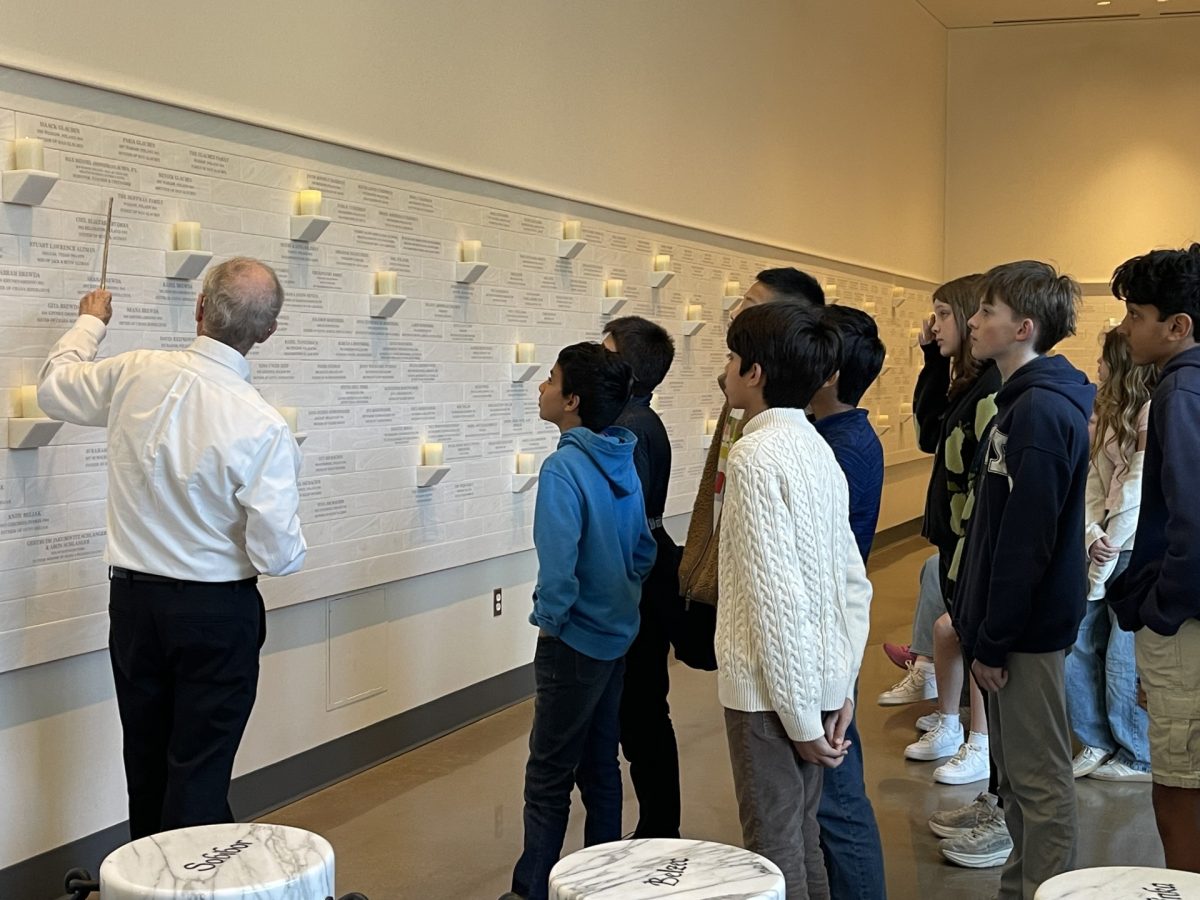
Students watched a 45-minute film about the Holocaust and broke into three groups based on their advisories to tour the different exhibits: the Holocaust/Shoah wing, the Human Rights Wing and the Pivot to America Wing.
As students traveled through the exhibits of the museum, many say they were moved by the experience of conversing with the interactive hologram of a Holocaust survivor. Students could ask specific questions and would receive an answer from the survivor.
“We saw one where you got to ask survivor questions, and he’d answered over 1,000 of them,” seventh grader Mason Bhatia said.
The visit was a very emotional experience for many students.
“It was sad,” said seventh grader Ritter Barnett, who said his grandfather had been forced to move into a Jewish ghetto as four year old boy in Europe during Nazi times. At the museum, he learned about the ghetto where his grandfather lived.
Seventh grader Zahra Rupani says she knew a little about the Holocaust before visiting the museum, but came away with a much deeper understanding of the tragic events.
“I don’t really like learning about heavy, real topics like that, but I did learn a lot there,” Rupani said.
One exhibit that students found especially painful was a railroad boxcar that had been used to transport Holocaust victims to concentration camps.
“It was really disturbing,” Rupani said. “People stuffed in those boxcars for a long time with no stopping. Seeing it in person made me feel sick.”
Some students said the most striking part of the experience was watching the museum’s film on the Holocaust, which showed actual photos and videos of the events as they were happening.
“The video really puts you in perspective of how the survivors felt at that time,” seventh grader Alex Brainer said. “It was sad because they are real experiences from real people.”
Some students described how the painful knowledge they learned in the museum visit and reading “Maus II” is relevant today.
“We need to learn about the past,” seventh grader Owen Austein said, “so we know enough [to prevent another Holocaust from happening].”