From streaming feeds to viral social media edits, romantic comedies hold a central place in student entertainment. While audiences have long sought out stories about relationships and connection, shifts in how these films are produced and consumed are changing how Upper Schoolers view the genre.
The Appeal
Students say that they appreciate romantic comedies, more commonly known as rom-coms, for how they can help people disconnect from reality, as many guarantee “happy and moving endings.” The genre is separate from romance because of its comedic element, where writers insert deliberately timed jokes. Some students say that it is this that draws them into this medium of entertainment.
“I like the comedy part. Especially the banter,” sophomore Adrienne Akintola said.
The genre arose in the 1990s-2000s, with the emergence of many movies, including “How to Lose a Guy in 10 Days,” “She’s the Man” and “13 Going On 30.” According NNC Netral News, movies like these appeal across generations and remain widely watched today.
“2000s rom-coms were made for all ages, like ‘The Notebook’ where you can enjoy the movie no matter what age you are,” sophomore Lily Mann said.
However, some students feel like 2000s rom-coms do not accurately represent love or daily life.
“The older ones seem kind of fake, and it wouldn’t actually happen, whereas modern rom-coms like ‘The Summer I Turned Pretty’ seem more realistic,” freshman William Silberman said.
Most recent rom-com productions seem to be created with a “teenage girl” in mind. As a result, viewers have noticed increased emotional vulnerability, in comparison to 2000s rom coms which often featured “fairy-tale-like,” happy endings.
“You see the girl end up with the guy, and every conflict seems to magically resolve itself,” sophomore Emma Sandler said.
Dominance of Streaming Services
Major Hollywood studios have substantially reduced their production of rom-coms since the 2000s.
As a result, streaming services such as Prime Video and Netflix filled the gap left by Hollywood and currently dominate the rom-com industry with releases like, “The Last Sunrise,” “My Fault London” and “The Idea of You.”
Some appreciate the accessibility streaming services provide.
“I don’t like having to make plans to go the movies so just having them on my phone or on my computer is so much more accessible and easy,” Akintola said.
At the same time, others say they miss seeing rom-coms on the big screen.
“I always like going out to theaters to see them because it feels more encompassing,” senior Neve Felder said.
The Book to Movie Pipeline
One subgenre of romantic comedies are book-to-movie adaptations. Some examples include “The Love Hypothesis” and “People we Meet on Vacation.” These adaptations have gained increasing controversy from the public as many feel as though they stray from the plot of the book.
“I think that the movie or TV show is never going to be as good as the books because the books are the original and every little change is always going to upset some part of me,” Akintola said.
However, some readers say they find comfort in the predictability of movie adaptation endings and enjoy seeing how production companies choose to represent the novels.
Sophomore Sana Oblumpally says that she feels like the prominence of book adaptions showcases deeper problems related to unique content in Hollywood.
“I feel like instead of coming up with new, unique plots, production companies keep releasing movies and shows with recycled stories,” Oblumpally said.
Mass Production
As streaming services have released more romantic comedies, some viewers have started to question the quality of the films.
Junior Charlie Hamm and Oblumpally say the quality of modern rom-coms has declined in recent years. They added that the decline has been largely influenced by the mass production by streaming services like Netflix and Prime Video.
On the other hand, freshman Joanna Sun says that new releases have maintained the quality seen in the 2000s, naming a recent summer release, “Sterling Point,” that she considers well made.
Stigma Around Rom-Coms
According to several students, romantic comedies as a genre are typically associated with women and often portray attractive love interests with dramatic and unrealistic representations of love.
Sophomores Drake Clark and Baer Kelly say rom-coms are seen as “more of a feminine thing.”
Hamm says that boys are often pushed towards more traditional, masculine films, and that rom-coms are often “over-hated by guys.”
“If I am hanging out with my friends, and they see in my Netflix watch history that I was watching a rom-com, I feel like I’ll face judgment,” Kelly said.
The Community
Students say social media plays a large role in how audiences find rom-coms. Felder says she decides what to watch largely by what she sees on TikTok, where fan-made edits of scenes and characters circulate.
“I was largely influenced to watch one of my favorite Prime Movies, ‘The Love Hypothesis,’ through fan edits,” Felder said.
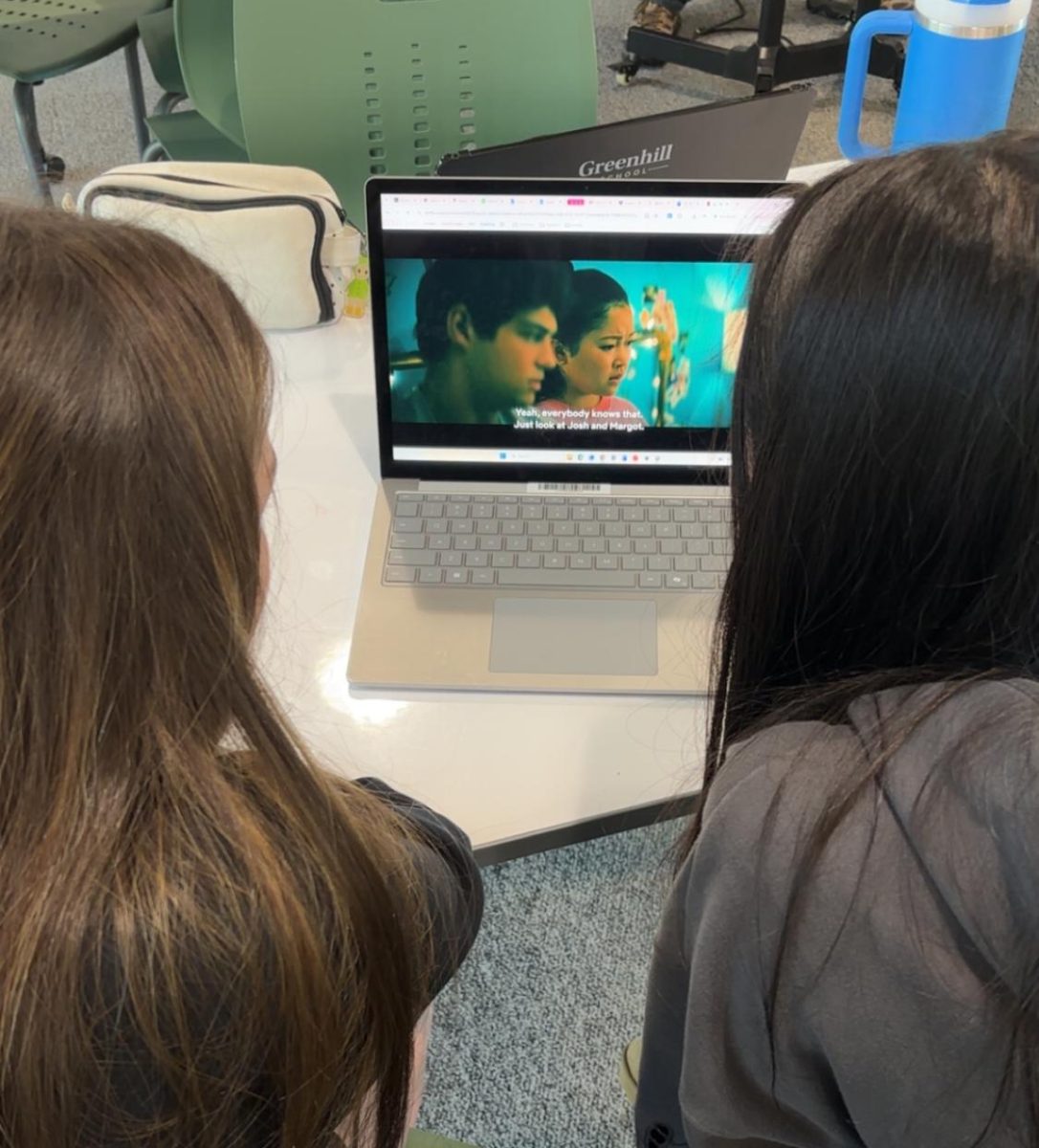
Students also say the genre brings people together, giving friends something to bond, connect and relate over.
“Watching shows like ‘The Summer I Turned Pretty’ with my friends are bonding moments that bring us closer together,” Felder said. “Some of my best memories with my friends are made by watching rom-coms.”