As Upper School student athletes balance their academic and athletic commitments, Greenhill has been called to reflect on the mental health challenges that accompany competitive sports. Through new support systems and coaching strategies, the school is working to help athletes manage pressure while recognizing current gaps.
Cycles of self-criticism and comparison, uncertainty about where to seek help and overlapping athletic and academic schedules has created a pattern of pressure to perform among Greenhill student athletes.
“I think sometimes athletes start to define their worth, connecting it to how they play and their sport, it’s like if they play badly, it reflects poorly on themselves,” sophomore Alice Stenberg, who plays soccer and field hockey, said.
Although sports can offer an outlet and teach athletes to manage pressure and rely on others, the weight of expectation often traps athletes between the decision of putting their sport first or their mental well-being.
“[Pressure] can degrade you, break you down, or it can make you better,” Director of Sports Performance and Student-Athlete Development Jessen Houston said.
In response, coaches, counselors and the Athletic Department have been working to create a safer environment for student athletes to communicate their mental health obstacles.
One initiative introduced last year, the Captains Council, educates team captains on how to balance pressure and share those lessons with their teammates.
“We are trying to educate our captains on ways to think differently and change perspectives,” Houston said.
Similarly, the Athletics Department has reduced athletic demands by decreasing the number of mandatory sports performance training sessions in order to give players the opportunity to focus more on themselves.
Another key initiative is the student support team, which meets once a month. The group brings together nurses, counselors, the Head of Upper School, the Director of Sports Medicine, Director of Academics and the Director of Sports Performance to discuss student concerns.
Coaches and counselors can reach out to the committee to voice unease about specific students and discuss what course of action would be best for them.
Individual teams have also adopted their own approaches to supporting athletes’ mental health.
Head Volleyball Coach Tatiane Deibert, for example, holds monthly one-on-one meetings with players to check in on their well-being.
“Just having a person check up on you, especially for athletes, is helpful because you’re busy and it’s hard to find time for prioritizing yourself,” junior Anaya Dubé, a volleyball player, said.
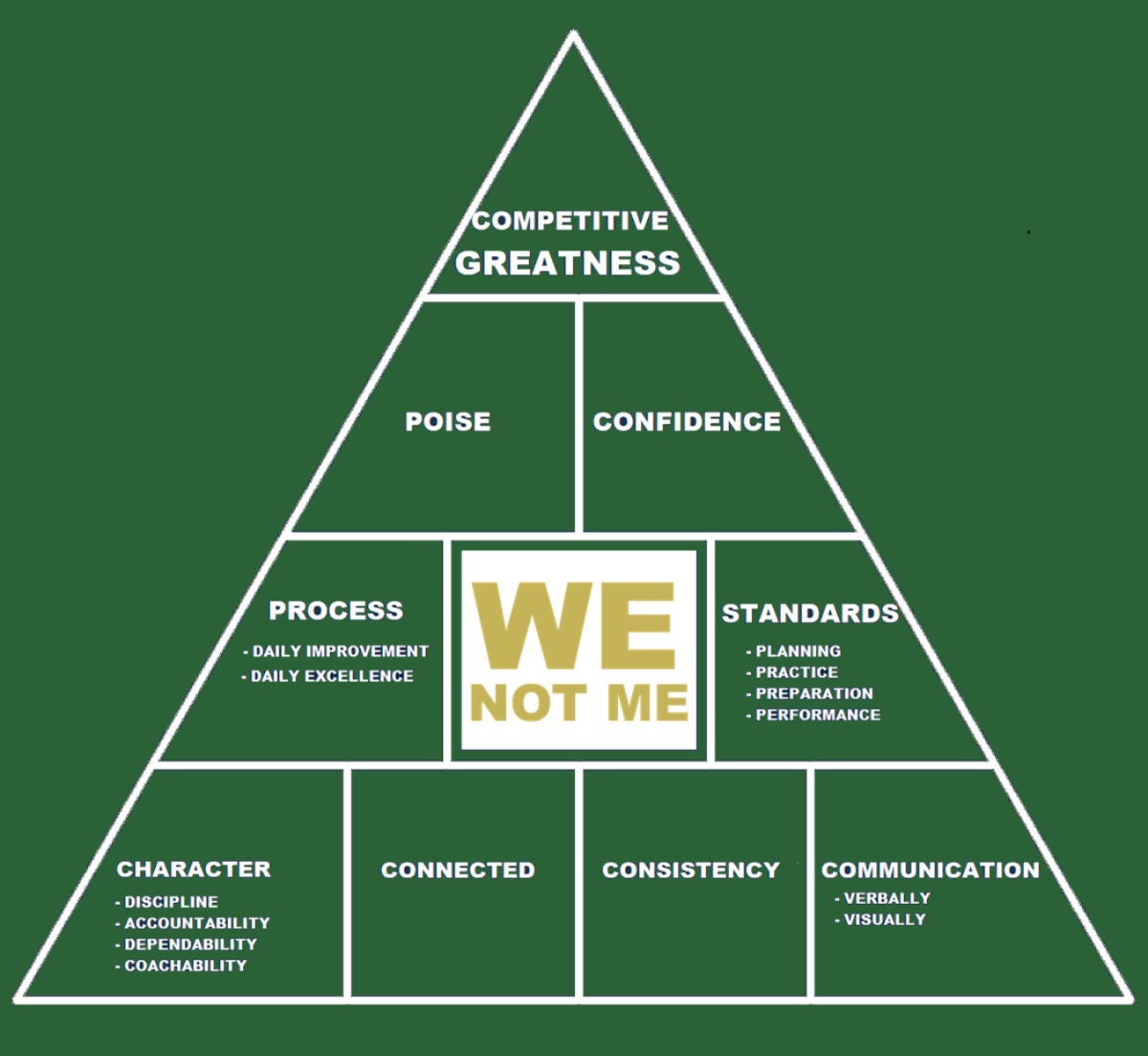
Similarly, Head Football Coach KJ Williams has taken on a visual approach to mental health. His framework uses a pyramid to break down the mental portions of an athlete’s behavior, highlighting the importance of communication, the process and confidence.
“We talk about ‘we not me,’ and that’ll keep the psyche from going into being selfish, and putting things just on yourself,” Williams said. “I think that’s the hardest thing that drives some mental health for student athletes.”
While faculty agrees improvements have been made, they also recognize that there is still room for growth.
Coaches have called for more education on mental management for athletes, coaches and parents, along with more open conversations about mental health and stronger collaboration between the counseling, athletics and academic departments.
“Sometimes we’re doing [mental health support] more in response to something as opposed to proactively or preventatively,” Director of Counseling Kathy Roemer said.
The transition to a preventative strategy has already commenced on campus, as Houston works with the University of North Texas to bring sports psychology interns to Greenhill.
“We’re hoping they can help us find ways and tactics to improve mental acuity with our athletes,” Houston said.
Meanwhile, Williams has been working on his own strategy: an app called Athlete’s Worth. The app is designed to include practical life resources, encouragement, organizational reminders and mental health crisis support in one place.
“This is a one-stop shop. When it’s overwhelming, this place has all the resources that you need to help you figure it out,” Williams said.