Unlike traditional theater performances, where actors memorize lines and rehearse scenes, improv performers have no script to follow. Instead, they rely on quick thinking, creativity and their ability to build off one another’s ideas.
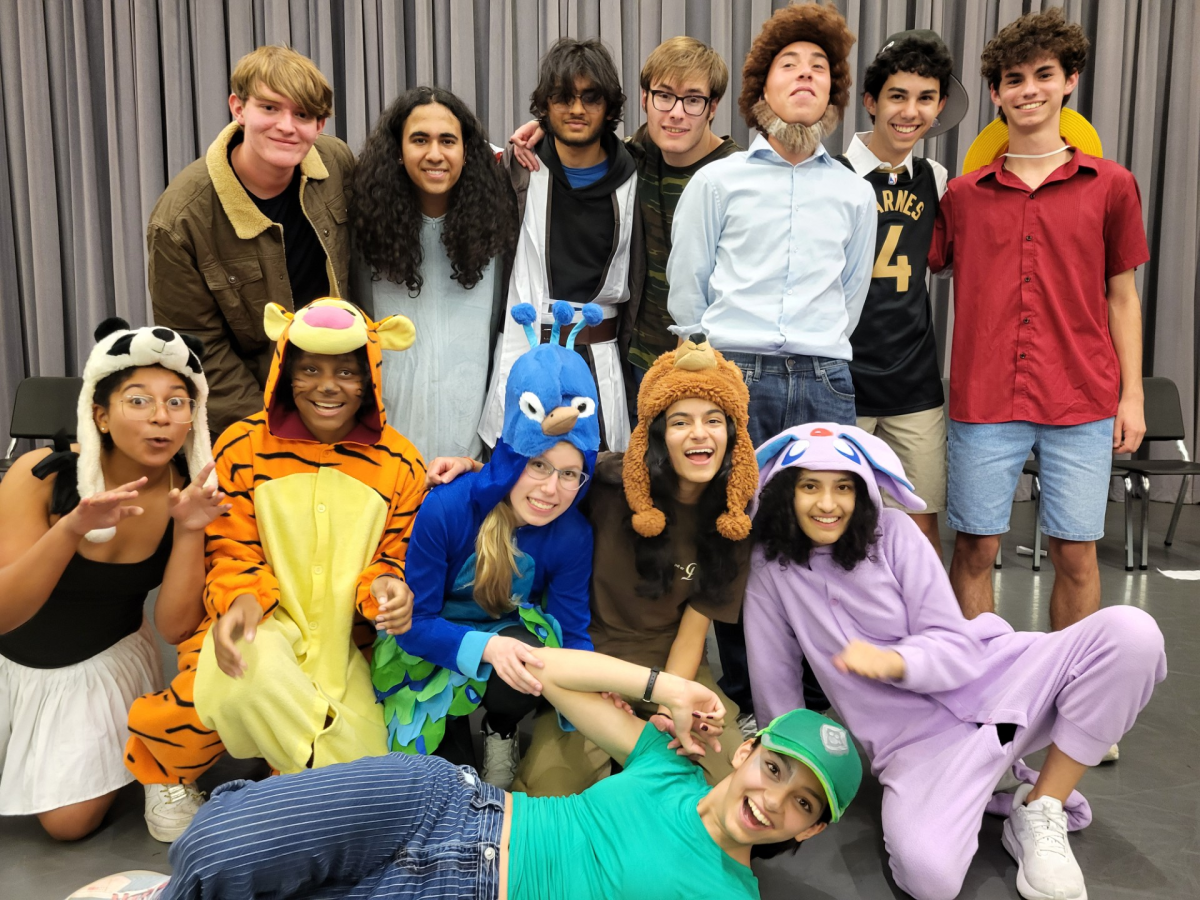
Greenhill’s Improv Troupe put those skills to the test during its first show of the year, a Halloween themed performance featuring unscripted games and scenes shaped by audience suggestions.
Although the performances may appear spontaneous, the preparation behind them is drastic. During rehearsals, performers practice games, develop characters, and learn how to respond to unexpected situations.
The troupe is coached by Middle School and Upper School Theater and Improv teacher Greg Mihalik, who has been involved in improv since 2002 and has taught it for more than 20 years.
“You need to be spontaneous. You need to be able to just jump out there and not know what you’re going to say and find it when you get there,” Mihalik said.
Before the performance, freshman Landon Luu explained how improvisers create scenes without knowing what they will say beforehand.
“We basically build off what the other person says and try to keep the scene moving,” Luu said. “A lot of it comes down to thinking quickly, listening, team chemistry and being creative with whatever situation we’re given.”
The Halloween theme carried throughout the performance, with performers wearing costumes and incorporating Halloween references into the opening sketch and games. Audience participation also plays a significant role in improv, with people providing suggestions and influencing what happens during scenes.
“The audience is feeding into what’s happening on stage. It’s just like making everything, you know, more energetic and alive and electric. A lot of times it can feel more like a sports audience and a theater audience.” Mihalik said.
One of the most interactive games was “Evil Mastermind,” in which a performer attempts to guess an object, location and character chosen by the audience. Spectators snap their fingers when the performer gets close to the answer and clap their hands when the correct answer is guessed.
During her first show with the troupe, freshman Sammar Agha said the audience was consistently engaged throughout the performance.
“They were very responsive. With every line, there was always a chuckle or two. It was really funny stuff,” Agha said.
Agha’s favorite moment came during “Category Die,” a game in which performers name objects within a given category without repeating an answer. After struggling to come up with different types of candy, Agha began inventing variations of Jolly Rancher flavors, which generated lots of laughter from the audience.
Unlike traditional theater, improv also means performers cannot take back their ideas or predict how a scene will develop.
“Whatever happens, happens,” Agha said.
For Mihalik, the goal extends beyond simply making the audience laugh. He wants both performers and audience members to enjoy the experience.
“We think more about what’s fun for the audience and what’s fun for the improvisers than what’s funny,” Mihalik said. “Funny kind of comes with it if everyone’s having fun.”