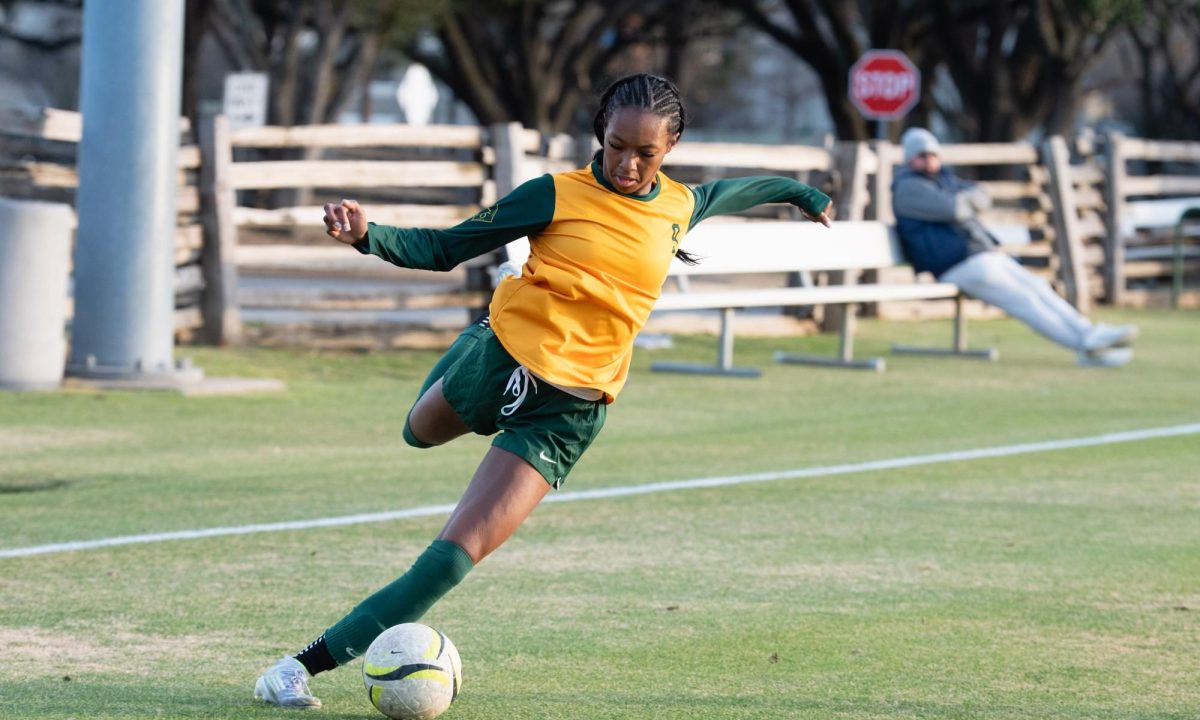
For many student-athletes at Greenhill, the transition from the center of action to the sidelines can happen in the blink of an eye. A pop in the knee. A slip-on wet turf. A shoulder sliding out of its socket. Recovering from an injury can entail not only physical pain, but also a difficult mental battle.
Junior Walter Fagelman realized his shoulder injury was serious during a soccer game against St. Mark’s School of Texas when he could not push himself off the ground.
“I didn’t feel any pain, and I looked down and saw my shoulder was out of its socket through my shirt,” Fagelman said.
Although the shoulder eventually popped back into place, the injury required surgery and months of rehabilitation. Later in his recovery journey, he suffered a second dislocation of the same shoulder, creating a mental challenge, according to Fagelman.
Similarly, junior Briana Solomon, a cheer and lacrosse athlete, felt a pop in her knee during a lacrosse game last spring.
“I didn’t really have pain,” Solomon said. “I just couldn’t move my leg.”
Junior lacrosse player Leo Meyer’s injury came early in the season after what he described as an illegal hit. An opposing player checked upward under his arm, dislocating his shoulder and ending his season.
For senior volleyball player Layla Esquenazi, the setback happened not once, but twice. After tearing her ACL in middle school, Esquenazi suffered another tear later in upper school, forcing her to go through the grueling recovery process all over again.
The physical journey to recovery often begins with exercises designed to rebuild and strengthen movements that once felt automatic.
For Solomon, that meant beginning physical therapy just two days after ACL surgery. Therapists bent her knee for the first time and guided her through exercises to retrain her muscles. Solomon had to relearn how to walk, carefully focusing on each step and rebuilding muscle around her knee.
“It was mentally and physically painful,” Solomon said.
One of Solomon’s biggest milestones came when she was finally able to lift her leg on her own after weeks of needing assistance.
For Esquenazi, rebuilding basic movements was equally frustrating.
“Walking was so annoying,” Esquenazi said. “I had to figure out how to put my foot down in the right position.”
For her, jumping was once something second nature for her in volleyball. However, after her injury, it became one of her most difficult movements.
“Jumping is so hard for me sometimes,” Esquenazi said.
For Fagelman, the hardest part of recovery was regaining mobility and strength in his shoulder. Even raising his arm to eye level caused pain, and rebuilding strength required repetitive band exercises and gradual upper-body work.
“I was so weak in my shoulder and it hurt so bad that I couldn’t do push-ups,” Fagelman said.
After experiencing a second dislocation, the recovery process felt even more daunting, says Fagelman.
Meyer also spent months in physical therapy strengthening the muscles around his shoulder while avoiding heavy lifts that could risk another dislocation.
“There was a point where everything still hurt,” Meyer said. “I was scared it would happen again.”
Beyond the physical toll, the emotional impact of injury can be just as challenging.
For Meyer, after months of offseason training, he was forced to watch from the sidelines as his teammates developed and games continued without him.
“The hardest part for me was really watching everybody improve,” Meyer said.
Fagelman shared similar frustration, explaining that watching his team adapt and rebuild without him was one of the hardest emotional battles.
Solomon said being sidelined made her realize how much she valued competing.
“Watching them play made me want to come back even more,” Solomon said.
For Esquenazi, the mental strain went even deeper. According to her, losing the ability to play volleyball was devastating.
“I felt like I lost my sense of purpose,” Esquenazi said. Returning to competition brings a new set of mental challenges.
Fagelman admitted he was nervous before his first game back, especially after dislocating the same shoulder twice.
“I didn’t want to go through another eight months of recovery,” Fagelman said.
That fear disappeared quickly.
“The first play of the game, I made a hard tackle with that shoulder,” Fagelman said. “After that, I knew I was mentally ready.”
Esquenazi said even now, she sometimes holds back slightly out of fear.
“My coaches say I still hold back sometimes,” Esquenazi said.
Ultimately, these injuries provided a perspective many athletes previously lacked.
Solomon says her experience taught her to appreciate simple abilities she once took for granted.
“You don’t realize what you have until it’s gone,” Solomon said.
For Meyer, the injury ended his feeling of invincibility.
“You never know when it could just end,” Meyer said. “You can’t take it for granted.”
For Esquenazi, the setbacks reshaped her long-term goals. The experience inspired her interest in physical therapy and helping athletes facing similar challenges.
“The comeback is always greater than the setback,” Esquenazi said.
Through the long road to recovery, these Greenhill athletes say they learned that resilience is not only built during competition, but also in the slow, disciplined fight to return to it.
Greenhill athletic trainer Jaclyn Carranza said many upper school athletes’ injuries stem from preventable factors.
“A lot of times it’s a lack of proper mechanics or not warming up correctly,” Carranza said. “If you don’t prepare your body for what you’re about to do, you’re increasing your risk.”
Carranza emphasized the importance of strength and conditioning programs, proper stretching and recognizing early warning signs.
Overuse and constant competition without adequate rest can also contribute to injuries. Sleep, nutrition and recovery play major roles in keeping athletes healthy.
“Recovery matters,” Carranza said. “Sleep and nutrition directly impact how your body performs and heals.”